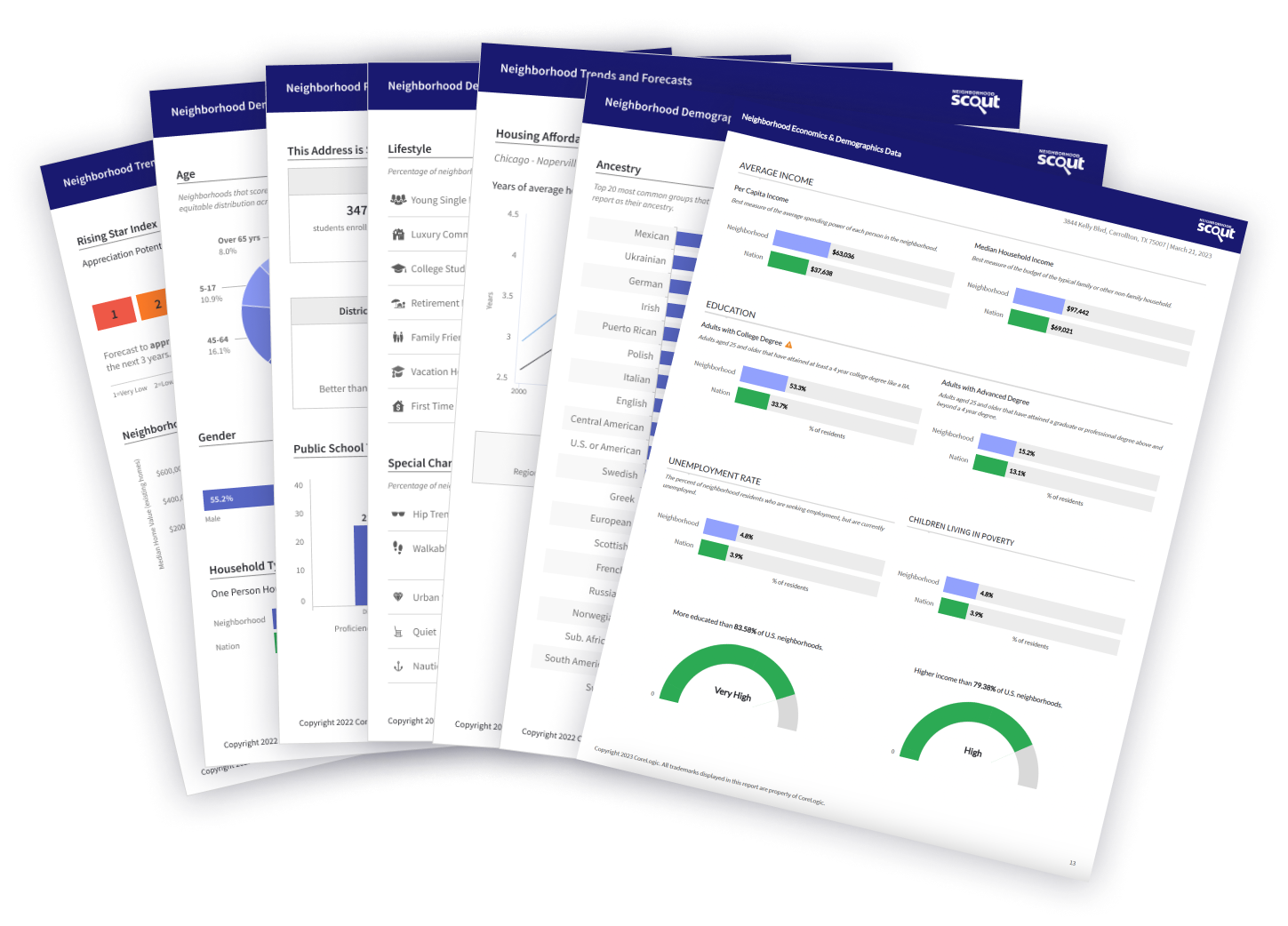
New Salisbury is a tiny town located in the state of Indiana. With a population of 550 people and just one neighborhood, New Salisbury is the 401st largest community in Indiana.
When you are in New Salisbury, you'll notice that it is more blue-collar than most other communities in America. 51.50% of New Salisbury’s employed work in blue-collar jobs, while America averages only 27.7% that do. Overall, New Salisbury is a town of transportation and shipping workers, sales and office workers, and production and manufacturing workers. There are especially a lot of people living in New Salisbury who work in office and administrative support (19.17%), maintenance occupations (14.66%), and management occupations (7.52%).
It is a fairly quiet town because there are relatively few of those groups of people who have a tendency to be noisy. (Children, for example, often can't help themselves from being noisy, and being parents ourselves, we know!) New Salisbury has relatively few families with children living at home, and is quieter because of it. Renters and college students, for their own reasons, can also be noisy. New Salisbury has few renters and college students. But the biggest reason it is quieter in New Salisbury than in most places in America, is that there are just simply fewer people living here. If you think trees make good neighbors, New Salisbury may be for you.
One downside of living in New Salisbury, however, is that residents on average have to contend with a long commute, spending on average 39.96 minutes every day commuting to work.
Being a small town, New Salisbury does not have a public transit system used by locals to get to and from work.
The percentage of adults in New Salisbury with college degrees is slightly lower than the national average of 21.84% for all communities. 16.67% of adults in New Salisbury have a bachelor's degree or advanced degree.
The per capita income in New Salisbury in 2022 was $30,199, which is middle income relative to Indiana, and lower middle income relative to the rest of the US. This equates to an annual income of $120,796 for a family of four. However, New Salisbury contains both very wealthy and poor people as well.
The people who call New Salisbury home describe themselves as belonging to a variety of racial and ethnic groups. The greatest number of New Salisbury residents report their race to be White. Important ancestries of people in New Salisbury include Irish, German, Romanian, French, and Yugoslavian.
The most common language spoken in New Salisbury is English. Other important languages spoken here include African languages and Arabic.
When you see a neighborhood for the first time, the most important thing is often the way it looks, like its homes and its setting. Some places look the same, but they only reveal their true character after living in them for a while because they contain a unique mix of occupational or cultural groups. This neighborhood is very unique in some important ways, according to NeighborhoodScout's exclusive exploration and analysis.
Most American households own a car or other vehicle. Many own two cars or perhaps three. In the United States, it is useful to have an automobile not only for commuting, but also for shopping and getting to other services one needs. But NeighborhoodScout's analysis revealed that households in the neighborhood have a highly unusual car ownership. Residents of this neighborhood must really love automobiles. NeighborhoodScout's Analysis reveals that 49.9% of the households here have four, five, or more cars. That is more cars per household than in 99.6% of the neighborhoods in the nation.
Did you know that the neighborhood has more Romanian ancestry people living in it than nearly any neighborhood in America? It's true! In fact, 1.1% of this neighborhood's residents have Romanian ancestry.
There are two complementary measures for understanding the income of a neighborhood's residents: the average and the extremes. While a neighborhood may be relatively wealthy overall, it is equally important to understand the rate of people - particularly children - who are living at or below the federal poverty line, which is extremely low income. Some neighborhoods with a lower average income may actually have a lower childhood poverty rate than another with a higher average income, and this helps us understand the conditions and character of a neighborhood.
The neighbors in the neighborhood in New Salisbury are middle-income, making it a moderate income neighborhood. NeighborhoodScout's exclusive analysis reveals that this neighborhood has a higher income than 48.2% of the neighborhoods in America. With 12.1% of the children here below the federal poverty line, this neighborhood has a higher rate of childhood poverty than 55.1% of U.S. neighborhoods.
The old saying "you are what you eat" is true. But it is also true that you are what you do for a living. The types of occupations your neighbors have shape their character, and together as a group, their collective occupations shape the culture of a place.
In the neighborhood, 43.0% of the working population is employed in executive, management, and professional occupations. The second most important occupational group in this neighborhood is manufacturing and laborer occupations, with 25.3% of the residents employed. Other residents here are employed in clerical, assistant, and tech support occupations (18.5%), and 13.2% in sales and service jobs, from major sales accounts, to working in fast food restaurants.
The most common language spoken in the neighborhood is English, spoken by 97.2% of households. Some people also speak Polish (2.0%).
Boston's Beacon Hill blue-blood streets, Brooklyn's Orthodox Jewish enclaves, Los Angeles' Persian neighborhoods. Each has its own culture derived primarily from the ancestries and culture of the residents who call these neighborhoods home. Likewise, each neighborhood in America has its own culture – some more unique than others – based on lifestyle, occupations, the types of households – and importantly – on the ethnicities and ancestries of the people who live in the neighborhood. Understanding where people came from, who their grandparents or great-grandparents were, can help you understand how a neighborhood is today.
In the neighborhood in New Salisbury, IN, residents most commonly identify their ethnicity or ancestry as German (21.3%). There are also a number of people of English ancestry (14.1%), and residents who report Irish roots (11.9%), and some of the residents are also of French ancestry (4.4%), along with some Scottish ancestry residents (1.3%), among others.
How you get to work – car, bus, train or other means – and how much of your day it takes to do so is a large quality of life and financial issue. Especially with gasoline prices rising and expected to continue doing so, the length and means of one's commute can be a financial burden. Some neighborhoods are physically located so that many residents have to drive in their own car, others are set up so many walk to work, or can take a train, bus, or bike. The greatest number of commuters in neighborhood spend between 45 minutes and one hour commuting one-way to work (45.5% of working residents), longer and tougher than most commutes in America.
Here most residents (82.2%) drive alone in a private automobile to get to work. In addition, quite a number also carpool with coworkers, friends, or neighbors to get to work (9.3%) . In a neighborhood like this, as in most of the nation, many residents find owning a car useful for getting to work.