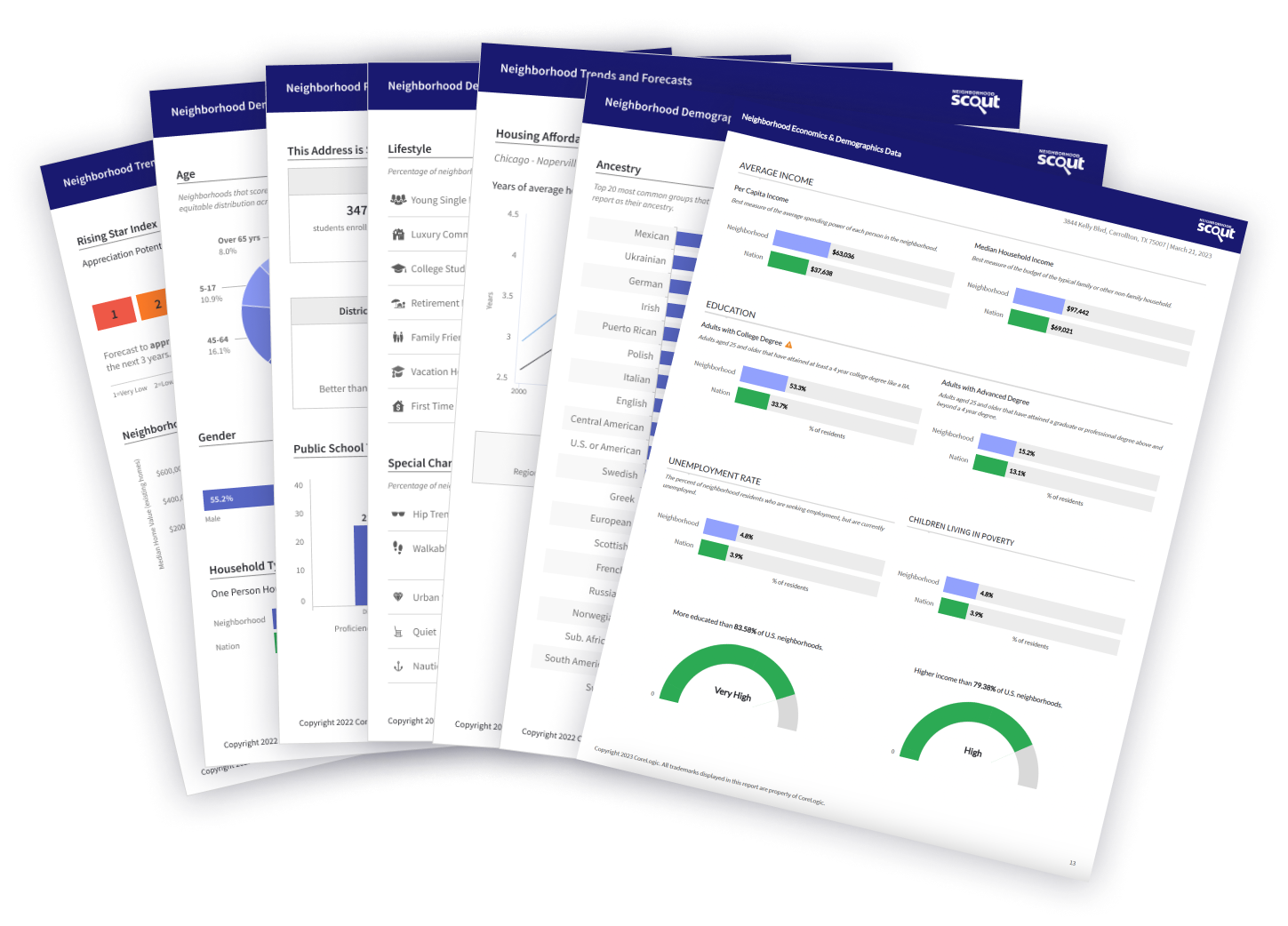
Wetmore is a very small town located in the state of Michigan. With a population of 2,899 people and just one neighborhood, Wetmore is the 279th largest community in Michigan.
Because occupations involving physical labor dominate the local economy, Wetmore is generally considered to be a blue-collar town. 36.15% of the Wetmore workforce is employed in blue-collar occupations, compared to the national average of 27.7%. Overall, Wetmore is a town of professionals, service providers, and sales and office workers. There are especially a lot of people living in Wetmore who work in sales jobs (9.89%), teaching (9.76%), and office and administrative support (8.05%).
Another notable thing is that Wetmore is an extremely popular vacation destination. A significant portion of the population is seasonal. During the vacation season, the town experiences a large influx of people who take up residence in second homes they own in the area. As the vacation season ends, the population drops again, leaving behind a substantially quieter and smaller town.
It is a fairly quiet town because there are relatively few of those groups of people who have a tendency to be noisy. (Children, for example, often can't help themselves from being noisy, and being parents ourselves, we know!) Wetmore has relatively few families with children living at home, and is quieter because of it. Renters and college students, for their own reasons, can also be noisy. Wetmore has few renters and college students. But the biggest reason it is quieter in Wetmore than in most places in America, is that there are just simply fewer people living here. If you think trees make good neighbors, Wetmore may be for you.
In Wetmore, however, the average commute to work is quite long. On average, people spend 31.50 minutes each day getting to work, which is significantly higher than the national average.
Wetmore is a small town, and as such doesn't have a public transit system that people use to get to and from their jobs every day.
The percentage of adults in Wetmore with college degrees is slightly lower than the national average of 21.84% for all communities. 14.20% of adults in Wetmore have a bachelor's degree or advanced degree.
The per capita income in Wetmore in 2022 was $20,904, which is low income relative to Michigan and the nation. This equates to an annual income of $83,616 for a family of four. However, Wetmore contains both very wealthy and poor people as well.
Wetmore is a very ethnically-diverse town. The people who call Wetmore home describe themselves as belonging to a variety of racial and ethnic groups. The greatest number of Wetmore residents report their race to be White, followed by Black or African-American. Important ancestries of people in Wetmore include German, Finnish, English, Irish, and Polish.
The most common language spoken in Wetmore is English. Other important languages spoken here include Italian and Polish.
When you see a neighborhood for the first time, the most important thing is often the way it looks, like its homes and its setting. Some places look the same, but they only reveal their true character after living in them for a while because they contain a unique mix of occupational or cultural groups. This neighborhood is very unique in some important ways, according to NeighborhoodScout's exclusive exploration and analysis.
An interesting characteristic about the neighborhood is that there are more incarcerated people living here than 99.3% of neighborhoods in the U.S. The United States has the highest rate of incarceration in the world, currently with 1 out of every 100 adults in the country are incarcerated as a punishment for crimes committed. The extremely high incarceration rate of this neighborhood could mean that a prison, juvenile detention facility or other correctional facility occupies a large proportion of the neighborhood, or contains a large portion of the neighborhood's population.
Despite all of the residential real estate here in the neighborhood, NeighborhoodScout has discovered that much of it is vacant. In resort or second-home vacation areas, this naturally occurs because homes and apartments are seasonally occupied, and empty for a portion of the year. In non-vacation or resort areas, however, this can be an indicator of property abandonment or a weak real estate market. The vacancy rate here is 51.1%, which is higher than 98.8% of all U.S. neighborhoods.
In addition, uncrowded roads, rural America and space to be the individual you are. If you like these characteristics, this neighborhood may fit you. With just 9 residents per square mile, is less crowded than 97.3% of all U.S. neighborhoods. One of the notable things about is that it is one of the quietest neighborhoods in America, according to NeighborhoodScout's exclusive analysis and quantitative rating of quietness. When you are here, you will find it to be very quiet. If quiet and peaceful are your cup of tea, you may have found a great place for you.
Did you know that the neighborhood has more Finnish ancestry people living in it than nearly any neighborhood in America? It's true! In fact, 8.1% of this neighborhood's residents have Finnish ancestry.
There are two complementary measures for understanding the income of a neighborhood's residents: the average and the extremes. While a neighborhood may be relatively wealthy overall, it is equally important to understand the rate of people - particularly children - who are living at or below the federal poverty line, which is extremely low income. Some neighborhoods with a lower average income may actually have a lower childhood poverty rate than another with a higher average income, and this helps us understand the conditions and character of a neighborhood.
The neighbors in the neighborhood in Wetmore are lower-middle income, making it a below average income neighborhood. NeighborhoodScout's research shows that this neighborhood has an income lower than 68.0% of U.S. neighborhoods. With 11.7% of the children here below the federal poverty line, this neighborhood has a higher rate of childhood poverty than 54.1% of U.S. neighborhoods.
The old saying "you are what you eat" is true. But it is also true that you are what you do for a living. The types of occupations your neighbors have shape their character, and together as a group, their collective occupations shape the culture of a place.
In the neighborhood, 34.8% of the working population is employed in manufacturing and laborer occupations. The second most important occupational group in this neighborhood is sales and service jobs, from major sales accounts, to working in fast food restaurants, with 27.8% of the residents employed. Other residents here are employed in executive, management, and professional occupations (27.6%), and 10.3% in government jobs, whether they are in local, state, or federal positions.
The languages spoken by people in this neighborhood are diverse. These are tabulated as the languages people preferentially speak when they are at home with their families. The most common language spoken in the neighborhood is English, spoken by 98.3% of households. Other important languages spoken here include Italian and Polish.
Culture is the shared learned behavior of peoples. Undeniably, different ethnicities and ancestries have different cultural traditions, and as a result, neighborhoods with concentrations of residents of one or another ethnicities or ancestries will express those cultures. It is what makes the North End in Boston so fun to visit for the Italian restaurants, bakeries, culture, and charm, and similarly, why people enjoy visiting Chinatown in San Francisco.
In the neighborhood in Wetmore, MI, residents most commonly identify their ethnicity or ancestry as German (14.8%). There are also a number of people of Finnish ancestry (8.1%), and residents who report English roots (7.7%), and some of the residents are also of Irish ancestry (7.3%), along with some Polish ancestry residents (5.6%), among others.
Even if your neighborhood is walkable, you may still have to drive to your place of work. Some neighborhoods are located where many can get to work in just a few minutes, while others are located such that most residents have a long and arduous commute. The greatest number of commuters in neighborhood spend between 15 and 30 minutes commuting one-way to work (33.3% of working residents), which is shorter than the time spent commuting to work for most Americans.
Here most residents (81.6%) drive alone in a private automobile to get to work. In addition, quite a number also carpool with coworkers, friends, or neighbors to get to work (11.2%) . In a neighborhood like this, as in most of the nation, many residents find owning a car useful for getting to work.